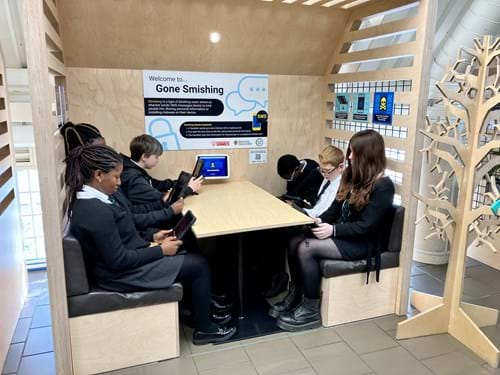
Working alongside Dr Lynsay Shepherd of Abertay University as part of a National Cyber Security Centre grant, we created Gone Smishing. A cyber security game built around the idea of teaching teenagers about smishing, a cyber security term for scam text messages (like phishing emails but for SMS messages).
The Problem
The majority of people in the UK will have received a scam text message or whatsapp in the past year but what might surprise you is how often criminals are successful at getting information or money through them. They may look obvious to some people but unfortunately in 2022 alone around £2,300 was stolen EVERY MINUTE through scams.
Whilst some people may have heard of and been trained by their workplace about scam emails, known as phishing emails, many have not heard of or been trained on scam text messages or ‘smishing’. For kids and teenagers this education is even worse and with more teenagers owning mobile phones than ever, this lack of education is alarming.
The Game
Set in a teenagers bedroom the game opens with a mobile phone which acts as the main focus of interaction. The phone will receive text messages periodically and after being taught how to do so the player is able to report any they think is fraudulent. Win the game by correctly spotting the different fraudulent messages as the game progresses and avoid getting scammed. Other apps on the phone and clues in the surrounding room can be investigated for more information to help come to decisions about which messages are scams!
Engaging Learning
In Gone Smishing, players get a safe environment to learn and make mistakes around cyber security and scam texts. With instant feedback on their choices, which is essential for learning, players get an understanding of their mistakes so they can improve. Current educational content in cyber security is incredibly dry and boring but this game makes it more engaging with real world examples in a real world setting with scoring and in game repercussions. For example, the piggy bank will break and plants will wilt if the player continually gets scammed . Players can compete with their friends to get better scores and try harder to not get scammed.
Research
As players complete the game their actions and decisions are recorded and stored in a database. This information could be essential as it feeds back into cyber security research allowing researchers like Dr Shepherd to see which types of scam texts caught out the most people and why. The data should also highlight the current level of education in the area based on the average of scores from all players which could help maker a stronger case for more work in the space.
Where can I play this?
This game has a permanent installation located on the first floor of the Dundee Science Centre in Dundee, Scotland. In future we hope to release the game once the research study has been completed.
If you are interested in getting your hands on the game or collaborating reach out at: contact@konglomerategames.com